AI, Automation, and the Future of Specialty Chemicals and Pharma Manufacturing
Explore how AI, automation, and robotics are transforming specialty chemicals and pharmaceutical manufacturing in 2025. This Chemrich Global report highlights the latest Q4 insights from industry leaders, including Elon Musk, and breaks down how intelligent machinery, digital twins, and AI dashboards are reshaping R&D, production, sustainability, and global supply chains. Discover Chemrich’s forward-looking strategy to stay ahead in the AI and smart-manufacturing race.
shehan makani | eshan makani
12/3/20257 min read
AI, Automation, and the Future of Specialty Chemicals and Pharma Manufacturing
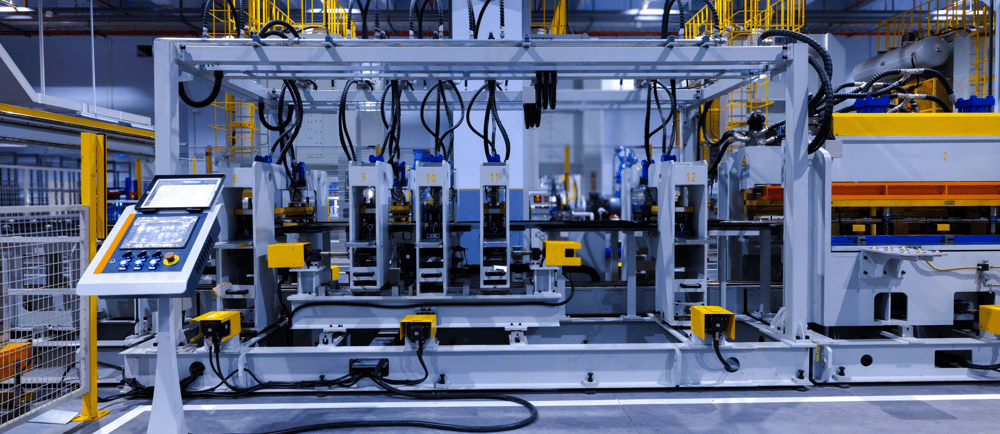
The fourth quarter of 2025 is witnessing a paradigm shift in chemical and pharmaceutical manufacturing as AI and robotics move from buzzwords to operational reality. Industry reports confirm that “AI-powered factories are emerging” and pushing manufacturers toward a new Industry 4.0 standard . In this landscape of smart factories and digital twins, even technology leaders foresee a radically different future. Tesla’s Elon Musk, for example, predicts that advanced AI and humanoid robots will eventually make “work… optional” in the coming decades , creating unprecedented abundance and even making money “irrelevant” in a high-automation world . Such visionary statements underscore a broader industry consensus: AI-driven automation is not just a tool, but a transformational force reshaping every step of chemical and drug production, with vast implications for sustainability and global well-being.
Emerging Trends: AI and Automation on the Factory Floor
Today’s manufacturing reports show that digital technologies have shifted from pilot projects to core infrastructure, setting a new standard for agility and efficiency . About half of U.S. manufacturers already use AI in daily operations, and 80% say it will be essential to their growth by 2030 . In practical terms, companies are using AI and machine learning for everything from quality control to demand forecasting . For example, generative AI is now assisting in product design by rapidly iterating prototypes and simulating material performance before physical tests . Digital twins—virtual replicas of entire production systems—have moved from concept to reality, enabling predictive maintenance and continuous process optimization . Meanwhile, factory robots have evolved from rigid, pre-programmed machines into adaptive learning systems that adjust in real time to production changes.
Key automation trends of 2025 include:
Adaptive robotics: Robots equipped with AI-powered vision and control are handling more complex tasks. They learn from data and can adapt to new products or workflows without reprogramming.
AI analytics and dashboards: Companies are deploying AI-driven dashboards and control platforms to monitor operations in real time. These systems aggregate sensor data, production metrics, and supply-chain information, giving managers a “single pane of glass” view for rapid decision-making. In life sciences, for example, advanced software and digital control platforms are expected to surge, enabling smarter analytics and AI-integrated lab and manufacturing workflows .
Smart supply chains: Digital tools optimize supply chains under shifting tariffs and shortages. With geopolitical tensions and raw material volatility, manufacturers increasingly use AI-enabled forecasting and routing to remain resilient . Nearshoring and real-time inventory matching are becoming standard, aided by predictive models that balance just-in-time efficiency with “just-in-case” buffers for resilience .
In short, Industry 4.0 is here. AI is no longer science fiction; it is driving strategic decisions on the plant floor . Companies that adopt these technologies gain a competitive edge in cost, quality, and innovation.
Voices of the Visionaries: Tech Leaders on AI’s Impact
Tech industry visionaries are vocal about what this shift means. On a global stage, Elon Musk boldly predicted at a 2025 investment forum that AI and robotics could eliminate the need for most work in just a couple of decades . He envisions a future where robots and AI eliminate poverty, making everyone wealthy by producing abundance of goods . While such claims sound utopian, they reflect a central truth: accelerating automation will fundamentally reshape labor and production. (Other leaders, like Warren Buffett, have recently warned about AI-generated misinformation, illustrating the need for cautious adoption.) For the specialty chemicals and pharma industries, Musk’s optimism translates into an urgent call to innovate: those who harness AI and robotics effectively can deliver massive value, while laggards risk obsolescence.
AI in Chemicals and Pharma: Transforming R&D and Production
The promise of AI extends deeply into chemical engineering and pharmaceutical manufacturing. Research reports note that the life science automation and robotics market is expanding rapidly as biotech and pharma firms embrace AI-driven research and automated production . In practice, this means labs and plants are increasingly equipped with automated, high-throughput workflows. Tasks like compound screening, synthesis, and formulation are being automated with robotics and AI decision-support to improve speed and consistency. For instance, integrated robotics systems now handle large-scale screening and process optimization, allowing chemists to “dial up” thousands of reactions with minimal manual intervention.
A recent market study highlights that in 2024 laboratory robotics already held a major share of the life-sciences automation market , and AI-driven autonomous systems are projected to see “remarkable growth, powering next-gen intelligent labs and smart manufacturing” . Pharmaceutical companies are deploying AI at each step: from using machine learning to predict reaction outcomes, to employing computer vision cameras for real-time batch monitoring. These technologies deliver clear benefits: faster development cycles, higher reproducibility, and near–error-free manufacturing processes . Another report notes that biomanufacturing (for biologics and cell therapies) is becoming “the backbone of modern R&D and biomanufacturing” thanks to automation .
Use cases already emerging include:
AI-accelerated R&D: Machine-learning models analyze chemical structure data to predict which molecules will succeed, dramatically cutting traditional trial-and-error. Early adopters report significantly faster discovery timelines and a richer pipeline of candidates.
Quality-by-Design dashboards: AI dashboards monitor sensor data from reactors, predicting off-spec batches before they occur and suggesting parameter tweaks. This is critical in pharma, where consistency and compliance (cGMP) are paramount.
Autonomous labs: Some companies are piloting self-driving labs that autonomously run experiments, analyze results, and plan next steps, all without human oversight. This unleashes round-the-clock innovation.
Behind these advances is a digital feedback loop: each run of an AI-driven system yields data that refines future models. Over time, plants and labs get steadily “smarter.” For specialty chemicals and pharma, the combination of chemistry expertise with AI software means new formulations and processes can be developed in months instead of years.
Shifting Portfolio: Specialty Chemicals Take Center Stage
Consulting analyses warn that commodity chemical markets face overcapacity and volatility, while specialty chemicals remain bright spots with higher margins . Deloitte reports that many companies are intentionally shifting from bulk petrochemicals into specialty segments to capture these advantages . This trend plays directly into Chemrich’s strengths: as a specialty chemicals network, Chemrich Global is inherently aligned with markets that reward tailored, high-performance ingredients.
In specialty chemical domains (e.g. fine pharma intermediates, food additives, cleaning agents), customers often demand custom formulations, small-batch production, and tight quality standards. Here, AI and automation yield outsized benefits. An AI-guided process, for instance, can optimize a complex multi-step reaction to boost yield and purity—critical when materials are costly. Similarly, robotics can automate packaging and blending operations that would be laborious by hand. By focusing on specialties, Chemrich avoids “the hyper-competitiveness of commodity markets” , and instead competes on service, agility, and technology—exactly where AI gives an edge.
Sustainability: AI for a Better Planet
AI and robotics are not only boosting efficiency; they also offer sustainability gains that align with the goal of making the world better. Smarter processes mean less waste, less energy, and fewer emissions. For example, AI-powered reaction planning can choose solvent- and energy-efficient pathways that a human might overlook. Digital twins allow continuous monitoring to catch leaks or deviations, preventing resource-intensive scrap.
Beyond manufacturing, AI-enabled robotics are tackling environmental challenges. A striking example from late 2025 is GuppyX, an AI-controlled robotic “fish” developed in Japan that autonomously swims polluted waterways and filters out microplastics . This demonstrates how advanced robotics can clean the environment — a powerful metaphor for how Chemrich’s technology-driven approach can contribute positively to global challenges. On a more practical level, Chemrich is exploring circular-economy initiatives (reusing byproducts, valorizing waste streams) and remote monitoring for batch quality that reduce travel and transportation. By integrating AI at every step, Chemrich can shrink its carbon footprint: digital scheduling minimizes truck runs, while sensors optimize energy use in plants. In short, the same AI engines that enhance productivity also reduce environmental impact.
Chemrich’s Vision: Staying Ahead with AI and Robotics
At Chemrich Global, we see these trends as both a mandate and an opportunity. Our strategy is to be at the forefront of AI innovation in specialty chemicals. Key initiatives include:
AI-Enabled Formulation Labs: We are developing smart R&D centers where automated reactors and liquid handlers iterate new formulations. Combined with AI analytics, these “microfactories” can test dozens of variations overnight, speeding new product development. This aligns with industry progress towards self-driving labs and flow chemistry (as we discussed in our September blog).
Real-Time AI Dashboards: We are implementing AI-powered dashboards that aggregate data from across our supply chain and manufacturing lines. These give instant visibility into inventory levels, quality metrics, and forecasted demand. Such data-driven control systems help us pivot quickly when conditions change — for example, rerouting supply if a shortage is detected, or adjusting production parameters on-the-fly for optimal yields .
Smart Manufacturing Infrastructure: In our upcoming specialty chemical plant projects, we plan to use advanced robotics (including collaborative robots) for tasks like palletizing and sampling. Automated continuous-flow equipment and digital twin simulations will allow chemistry processes to run 24/7 with minimal manual oversight. This reduces human error and improves consistency (critical for pharma-grade materials).
Pharma-Grade Automation: For our pharmaceutical customers, we aim to integrate AI into cGMP workflows. Automated end-to-end batch recording and video-monitoring can ensure compliance, while AI QC checks (e.g. image recognition of tablet coatings or chromatogram patterns) enable real-time quality assurance.
Sustainability Tech: We’re exploring AI-driven waste capture and resource reuse. For instance, machine learning models can optimize solvent recovery systems, and predictive maintenance prevents leaks and emissions. We have an ongoing “Circular Economy” initiative to turn by-products into new ingredients, inspired by models like bio-based isocyanate production .
Global AI Supply Network: Finally, Chemrich’s international network is being unified by technology. Our upcoming AI-powered sourcing platform (currently in beta) uses machine learning to match buyers with optimal global suppliers in real time. This means small labs or startups can get the exact raw materials they need, at the best price, almost instantly. An AI-driven supply engine reduces idle inventory and shortens lead times, benefiting customers and reducing waste.
All these efforts are driven by the conviction that technology and sustainability go hand in hand. By embedding AI and automation, Chemrich will not only improve its own operations but also enable customers of all sizes to innovate more responsibly. As CEO Shehan Makani has noted, embedding AI and real-time analytics into the supply chain “unlocks new possibilities for small and mid-sized buyers” . We intend to make that vision a reality.
Conclusion
AI, machine learning, and robotics are ushering in a new era for specialty chemicals and pharmaceutical manufacturing. Industry data and thought leaders alike confirm that smarter, connected factories are rapidly becoming the norm . For Chemrich Global, this revolution offers a way to make the world better: by increasing access to essential chemicals, reducing waste and emissions, and accelerating innovation in medicine and technology. We will continue to invest in AI-driven processes, digital dashboards, and sustainable practices, ensuring that we remain on the cutting edge of the AI and machinery race. In doing so, Chemrich is not just moving molecules – we are moving the entire specialty chemicals ecosystem toward a more efficient, eco-friendly future.
References (Q4 2025 sources):
IMA Financial Group. (2025). Manufacturing Markets in Focus: Q4 2025. [Industry report] .
Revell, E. (2025, Nov 19). Elon Musk predicts work will be ‘optional’ in coming decades. Fox Business. .
ClimateHack Global. (2025). Vol 147: Microplastic-Eating Robotic Fish. .
Austin, Z., & Yankovitz, D. (2025). 2026 Chemical Industry Outlook. Deloitte Insights. .
Precedence Research. (2025, Dec 2). Life Science Automation and Robotics Market Expands Rapidly as Biopharma Embraces AI and Automated Manufacturing. (BioSpace press release) .
Chemical Solutions
Trusted partner for industries seeking high-quality chemicals, custom manufacturing solutions, and advanced pharmaceutical equipment.
Innovation
Growth
© 2025. All rights reserved.
Connect
Chemrich Global.